 Digitsols
Branding is more than a logo
Your logo is only the signature. A practical look at what actually builds a brand, from your website and tone of voice to service and physical space.
In this article
- Your brand exists in the customer’s mind
- Your logo is an identifier, not the entire identity
- Your website is part of your brand
- The way you communicate is branding
- Photography can change how your business is perceived
- Customer service is branding
- Your physical space is also part of the brand
- Branding helps people understand why you are different
- Consistency creates recognition
- Branding is also about what you choose not to be
- A rebrand will not fix a business problem by itself
- What makes a strong brand?
- Final thoughts
When people hear the word “branding”, one of the first things that comes to mind is a logo.
It makes sense.
A logo is one of the most visible elements of a business. It appears on your website, social media profiles, signage, packaging, business cards, uniforms and advertising.
But your logo is not your brand.
It is only one part of it.
Your brand is the overall impression people have of your business. It is what customers expect when they see your name, how they feel when they interact with your company and what they remember after the interaction is over.
For businesses in Cyprus, where reputation, recommendations and personal relationships can play an important role in purchasing decisions, understanding this difference matters.
A beautifully designed logo can help create a strong first impression.
Building a strong brand requires much more.
Your brand exists in the customer’s mind
Businesses often think of branding as something they create.
In reality, part of your brand is created by your customers.
You can choose your logo, colours, typography, photography and marketing messages. But you cannot completely control how people perceive your company.
That perception develops through experience.
- Was your website easy to use?
- Did someone answer the phone professionally?
- Was the quotation clear?
- Did the product arrive when promised?
- Was the service worth the price?
- Did the actual experience match what was advertised?
Every interaction adds another small piece to the customer’s perception of your business.
This is why branding goes far beyond graphic design.
Design helps communicate the brand. Experience proves whether the brand is believable.
Your logo is an identifier, not the entire identity
Think about your logo as a signature.
It helps people recognise your business, but it cannot communicate everything about the company by itself. It is the mark you protect and register as a trademark, yet registering a mark is not the same as building a reputation behind it.
Two businesses could have equally professional logos and still create completely different impressions.
One might feel premium and exclusive. Another might feel accessible and friendly. One could communicate tradition and experience. Another could position itself as innovative and unconventional.
These differences are created through a much wider system.
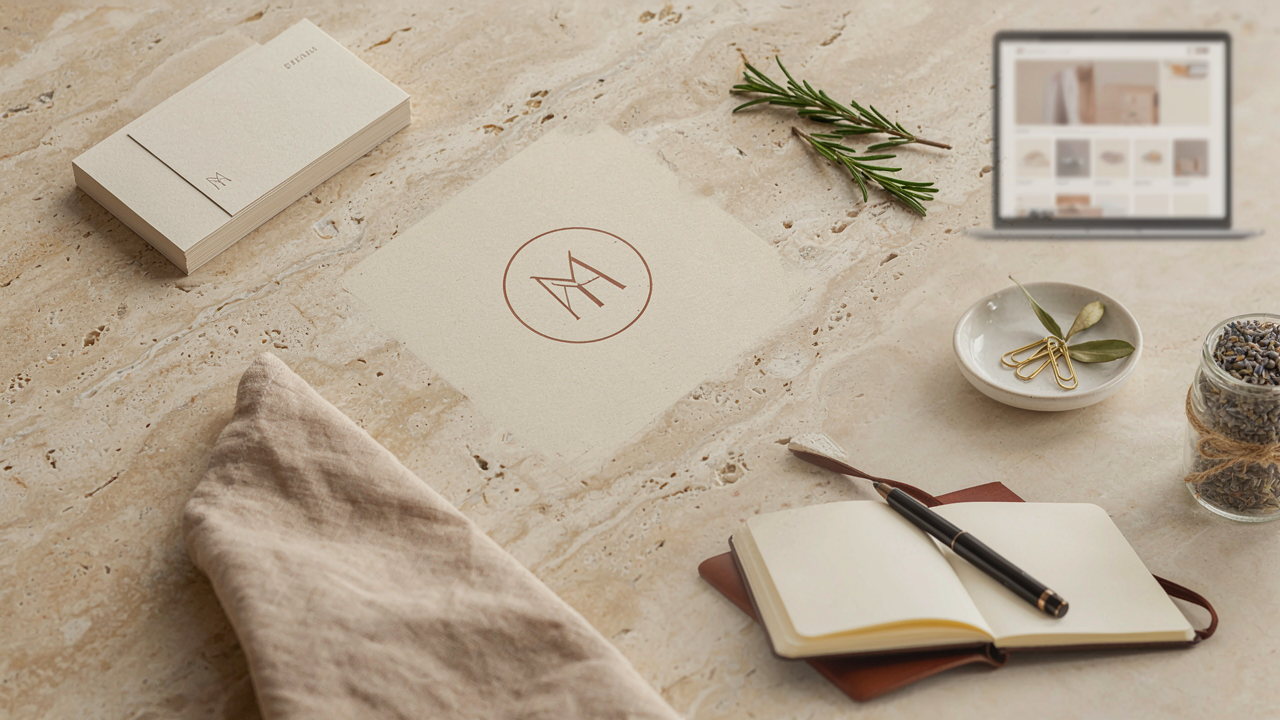
Your visual identity may include:
- Logo
- Colour palette
- Typography
- Photography
- Illustration style
- Icons
- Layout and spacing
- Packaging
- Signage
- Printed materials
- Digital design
When these elements work together consistently, customers begin to recognise your business even when the logo is not immediately visible.
That is a much stronger form of branding, and it is what our graphic design work is really about.
Your website is part of your brand
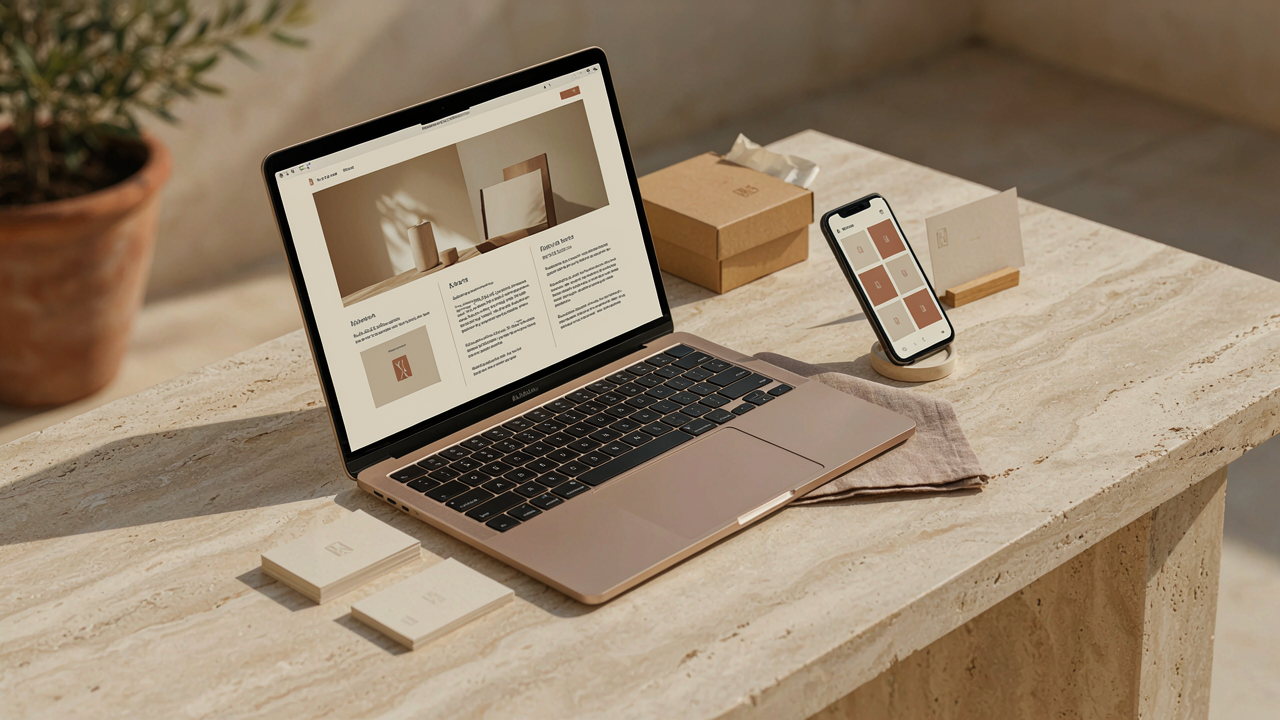
For many potential customers, your website is one of their first meaningful interactions with your company.
This makes web design a branding decision, not simply a technical one.
Imagine a company that wants to position itself as a premium service provider.
Its logo looks sophisticated. Its advertisements are professionally designed. Its office looks impressive.
Then you visit its website.
It is slow, difficult to navigate, outdated and frustrating on mobile.
The experience contradicts the brand.
The company may say “premium”, but the website communicates something else. If any of that sounds familiar, it is worth reading the five signs it is time to redesign your website.
The opposite is also true.
A well-designed website can strengthen the perception of a business before the customer ever speaks to someone.
Typography, photography, navigation, content, page speed and even the amount of space between elements contribute to that impression.
A good website does not simply display your brand.
It allows people to experience it.
The way you communicate is branding
Branding also has a voice.
Consider the difference between “Please contact our office for further information.” and “Have a question? Give us a call. We would be happy to help.”
Both sentences communicate essentially the same information.
But they do not feel the same.
The words a business uses help define its personality.
Some brands should sound formal and authoritative. Others should feel conversational and approachable. Some should communicate expertise and precision. Others may benefit from humour and energy.
There is no universal correct tone.
The important thing is that the tone fits the company and remains consistent.
If your website sounds highly corporate, your social media feels extremely casual and your emails sound like they were written by a completely different organisation, the brand becomes fragmented. Deciding this in advance is one of the quiet benefits of having a content plan.
Customers may not consciously notice every inconsistency.
They still experience it.
Photography can change how your business is perceived
Images are one of the fastest ways to communicate positioning.
This is why photography deserves more attention in branding. Usability research has consistently found that people ignore decorative stock imagery but study meaningful photographs.
Consider a restaurant.
Professional photography can communicate the quality of the food, atmosphere of the space and type of dining experience customers should expect.
- For an architect, photography can demonstrate attention to detail and design philosophy.
- For a hotel, images can sell an experience before the guest arrives.
- For a professional services firm, team photography can make an otherwise formal organisation feel more approachable.
This is particularly relevant in Cyprus for businesses in industries such as hospitality, property, construction, tourism, food and professional services.
Using random stock photographs simply because they look attractive can weaken the identity of the business.
Strong brands develop a recognisable visual language.
The images should feel like they belong to the same company.
Customer service is branding
You can invest thousands of euros in a new identity and damage it with one poor customer experience.
Imagine a business positioning itself around exceptional service.
Its website talks about putting customers first. Its advertising emphasises personal attention. Its social media promotes quality and professionalism.
Then a potential customer sends an enquiry and waits a week for a response.
The marketing says one thing.
The experience says another.
Which one do you think the customer will believe?
Brand promises are easy to make. Operational consistency is what makes them credible.
How quickly you respond, how you handle complaints, how your employees communicate and how problems are resolved are all part of your brand.
In many cases, these interactions have a greater impact than the logo itself.

Your physical space is also part of the brand
Branding does not stop when someone closes their browser.
For businesses with physical locations, the offline experience matters just as much.
A customer may discover your business through Instagram, visit your website and eventually arrive at your premises.
Ideally, those experiences should feel connected.
The signage, interior, menus, packaging, uniforms and printed materials should support the same positioning.
This is especially relevant for restaurants, cafés, hotels, clinics, retail stores, beauty businesses and other customer-facing companies across Cyprus.
If your online presence feels premium but the physical experience feels neglected, there is a disconnect.
Consistency builds confidence.
Branding helps people understand why you are different
One of the most important jobs of branding is differentiation.
This becomes particularly valuable in competitive markets where several companies offer similar services.
Consider searching for accountants in Nicosia, law firms in Limassol, property developers in Paphos, restaurants in Larnaca, hotels in Ayia Napa or web designers in Cyprus.
You will find many businesses offering broadly similar services.
So why should someone choose one over another?
Price may be part of the answer. Location may matter. Experience may matter.
But branding helps package these differences into something customers can understand and remember.
- Perhaps your business is known for speed.
- Perhaps it is known for exceptional attention to detail.
- Perhaps you specialise in a particular type of customer.
- Perhaps your approach is more personal.
- Perhaps you offer a premium experience.
- Perhaps you make a complicated service easier to understand.
Good branding takes these differences and communicates them consistently.
Consistency creates recognition
Recognition rarely happens because someone saw your logo once.
It develops through repetition. Consistency is a long-standing usability principle for the same reason it is a branding one: familiarity lowers the effort of dealing with you.
A potential customer might first discover your business through Google. A week later they see one of your Instagram posts. Then someone mentions your company in conversation. Later they return to your website.
If each interaction looks and feels connected, recognition begins to develop.
The colours are familiar. The photography feels familiar. The language sounds familiar. The overall experience feels familiar.
That familiarity matters.
People tend to feel more comfortable with businesses they recognise.
Consistency does not mean every piece of communication needs to look identical.
It means everything should feel like it came from the same brand.
Branding is also about what you choose not to be
A strong brand cannot be everything to everyone.
This can be difficult for businesses, particularly in smaller markets.
The temptation is to appeal to as many customers as possible.
Affordable but premium. Traditional but disruptive. Corporate but casual. Exclusive but for everyone.
Eventually, the message becomes unclear.
Strong branding requires choices.
- Who is your ideal customer?
- What do you want to be known for?
- What type of experience do you provide?
- What makes your approach different?
- What should customers expect from you?
- And equally important: what are you not trying to be?
Clear positioning makes design, content and marketing decisions much easier.
A rebrand will not fix a business problem by itself
Sometimes companies approach branding because something is not working.
Sales have slowed. Competitors look more modern. The website feels outdated. The company is struggling to attract a different type of customer.
A rebrand can certainly help.
But changing the logo alone rarely solves these problems.
Before redesigning anything, the business should understand why change is necessary.
- Perhaps the positioning is unclear.
- Perhaps the company has evolved but its identity has not.
- Perhaps customers misunderstand what the business offers.
- Perhaps the website does not communicate the quality of the service.
- Perhaps the visual identity is inconsistent.
- Perhaps the company is targeting a completely different market than it did five years ago.
Once the actual problem is understood, design can help solve it.
Without that strategic thinking, a rebrand can become little more than decoration.
What makes a strong brand?
A strong brand is not necessarily the company with the most expensive logo or the most elaborate visual identity.
It is the company that creates a clear and consistent impression.
- Its positioning makes sense.
- Its visual identity supports that positioning.
- Its website reinforces it.
- Its communication sounds consistent.
- Its customer experience delivers what the marketing promises.
- Its employees understand what the company represents.
And customers know what to expect.
That alignment is what makes branding powerful. You can see how we approach it across different industries in our case studies.
Final thoughts
A logo matters. Professional design matters. Colours, typography, photography and visual consistency all matter.
But they are tools used to express something larger.
Your brand is the complete experience people associate with your business.
It is your website and your social media presence. It is the way you answer an email. It is the quality of your service. It is the way your premises look. It is how your employees treat customers.
It is what people say about your company when you are not part of the conversation.
For businesses in Cyprus, building a stronger brand does not necessarily begin by asking: “Do we need a new logo?”
A better question is: “What do we want people to think and feel when they interact with our business?”
Once that answer is clear, the logo, website, content and visual identity have a much stronger foundation to build on.
Because branding is not simply about looking professional.
It is about becoming recognisable, consistent and memorable. If you are working through that question for your own company, we are happy to talk it through.
Keep reading
More from the Digitsols team

Five signs it is time to redesign your website
Slow, dated or quiet on enquiries? Five practical signs that your website is holding your business back, and how to tell a redesign from…

Why every local business needs a content plan
Posting when there is time is not a strategy. How a simple content plan helps a local business in Cyprus stay visible, consistent and…